DOCK180-Specific Antibody

377€ (100 µg)
Por favor contáctenos para obtener información detallada sobre el precio y disponibilidad.
Name
DOCK180-Specific Antibody
Category
Primary Antibodies
Provider
Abbexa
Reference
abx232493
Tested Applications
ELISA, WB, IF/ICC
Description
DOCK180-Specific Antibody is a Rabbit Polyclonal against DOCK180-Specific.
Documentos del producto
Instrucciones
Data sheet
Especificaciones del producto
| Category | Primary Antibodies |
| Immunogen Target | Target: DOCK180-Specific Immunogen: dedicator of cytokinesis 1 |
| Host | Rabbit |
| Reactivity | Human, Mouse, Rat |
| Assay Type | Concentration: 2 mg/ml |
| Recommended Dilution | WB: 1/500 - 1/2400, IF/ICC: 1/10 - 1/100. Optimal dilutions/concentrations should be determined by the end user. |
| Clonality | Polyclonal |
| Conjugation | Unconjugated |
| Isotype | IgG |
| Observed MW | Observed MW: 180 kDa |
| Purity | ≥ 95% (SDS-PAGE) |
| Purification | Purified by immunogen affinity chromatography. |
| Size 1 | 100 µg |
| Form | Liquid |
| Tested Applications | ELISA, WB, IF/ICC |
| Buffer | PBS, pH 7.3, with 0.02% sodium azide and 50% glycerol. |
| Availability | Shipped within 5-12 working days. |
| Storage | Aliquot and store at -20°C. Avoid repeated freeze/thaw cycles. |
| Dry Ice | No |
| UniProt ID | Q14185 |
| Gene ID | 1793 |
| OMIM | 601403 |
| Alias | DOCK1, DOCK180, ced5, Dock180, dedicator of cytokinesis 1 |
| Background | Antibody anti-DOCK1 |
| Status | RUO |
| Note | THIS PRODUCT IS FOR RESEARCH USE ONLY. NOT FOR USE IN DIAGNOSTIC, THERAPEUTIC OR COSMETIC PROCEDURES. NOT FOR HUMAN OR ANIMAL CONSUMPTION. |
Background
DOCK1, also known as DOCK180, is a GEF that activates Rac1 GTPase, regulating cytoskeleton rearrangement and cell migration. It forms a DOCK1–ELMO–Crk complex for Rac1 activation, driving lamellipodia formation and cell motility. DOCK1 is crucial for phagocytosis, cell polarity, neural crest migration, and cardiovascular development. Overexpression links to cancer metastasis by promoting tumor motility. It localizes to cytoplasm and membrane ruffles during migration and is regulated via phosphorylation and scaffold interactions. Knockout studies in mice reveal its role in embryonic viability, neuronal differentiation, and immune responses, highlighting its importance in cell adhesion and morphology.
Productos relacionados
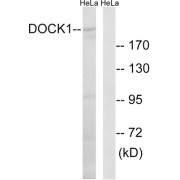
Dedicator of Cytokinesis 1 (DOCK1) Antibody
Rabbit polyclonal antibody against DOCK1 protein. Immunogen region is C-terminal.…
Ver producto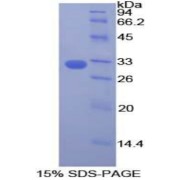
Human Dedicator Of Cytokinesis 1 (DOCK1) Protein
Human Dedicator Of Cytokinesis 1 (DOCK1) is a recombinant Human protein expressed in E. coli.…
Ver producto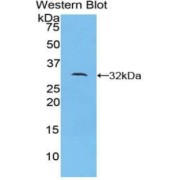
Dedicator of Cytokinesis 1 (DOCK1) Antibody
Polyclonal Antibody to Dedicator Of Cytokinesis 1 (DOCK1).…
Ver producto