Human Apolipoprotein D (ApoD) CLIA Kit
845€ (96 tests)
Por favor contáctenos para obtener información detallada sobre el precio y disponibilidad.
Name
Human Apolipoprotein D (ApoD) CLIA Kit
Category
CLIA Kits
Provider
Abbexa
Reference
abx195167
Tested Applications
CLIA
Description
Human Apolipoprotein D (APOD) Chemiluminescent Immunoassay (CLIA) Kit is a Sandwich Chemiluminescent Immunoassay (CLIA) Kit for use with Serum, plasma and other biological fluids.
Documentos del producto
Instrucciones
Data sheet
Especificaciones del producto
| Category | CLIA Kits |
| Immunogen Target | Apolipoprotein D (APOD) |
| Reactivity | Human |
| Detection Method | Chemiluminescent |
| Assay Data | Quantitative |
| Assay Type | Sandwich |
| Test Range | 1.56 ng/ml - 100 ng/ml |
| Sensitivity | < 0.67 ng/ml |
| Recommended Dilution | Optimal dilutions/concentrations should be determined by the end user. |
| Size 1 | 96 tests |
| Size 2 | 5 × 96 tests |
| Size 3 | 10 × 96 tests |
| Form | Standard: Lyophilized |
| Tested Applications | CLIA |
| Sample Type | Serum, plasma and other biological fluids. |
| Availability | Shipped within 5-20 working days. |
| Storage | Shipped at 4°C. Upon receipt, store the kit according to the storage instruction in the kit's manual. |
| Dry Ice | No |
| Alias | APOD, Apod, apolipoprotein D |
| Background | CLIA Kits APOD |
| Status | RUO |
| Note | THIS PRODUCT IS FOR RESEARCH USE ONLY. NOT FOR USE IN DIAGNOSTIC OR THERAPEUTIC PROCEDURES. The range and sensitivity is subject to change. Please contact us for the latest product information. For accurate results, sample concentrations must be diluted to mid-range of the kit. If you require a specific range, please contact us in advance or write your request in your order comments. Please note that our kits are optimised for detection of native samples, rather than recombinant proteins. We are unable to guarantee detection of recombinant proteins, as they may have different sequences or tertiary structures to the native protein. The stability of the kit is determined by the rate of activity loss. The loss rate is less than 5% within the expiration date under appropriate storage conditions. To minimize performance fluctuations, operation procedures and lab conditions should be strictly controlled. It is also strongly suggested that the whole assay is performed by the same user throughout. |
Background
Apolipoprotein D (APOD) is a unique member of the apolipoprotein family, functioning as a lipid transporter in the plasma and extracellular fluids. Unlike other apolipoproteins, APOD is not synthesized in the liver but is predominantly produced in the central nervous system (CNS), liver, kidneys, and mammary glands. APOD associates with high-density lipoprotein (HDL) and contributes to cholesterol transport, as well as lipid metabolism. Structurally, APOD is classified as a member of the lipocalin family, which binds small hydrophobic molecules, such as arachidonic acid and cholesterol. It has a prominent role in antioxidant defense by neutralizing reactive oxygen species (ROS) and reducing oxidative stress, particularly in the CNS. APOD is upregulated during injury and neurodegenerative conditions, including Alzheimer’s disease, Parkinson’s disease, and stroke, indicating its neuroprotective function. Elevated levels of APOD are also found in cancer, cardiovascular disease, and diabetes, suggesting its role in cellular stress responses. APOD may regulate inflammation, cellular lipid homeostasis, and signal transduction, making it a promising biomarker and therapeutic target in age-related disorders, metabolic syndromes, and neurological diseases.
Productos relacionados
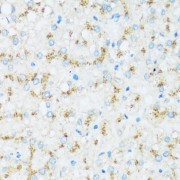
Apolipoprotein D (APOD) Antibody
APOD Antibody is a Rabbit Polyclonal antibody against APOD. This gene encodes a component of high density lipoprotein th…
Ver producto
Apolipoprotein D (APOD) Antibody
APOD is a component of high density lipoprotein that has no marked similarity to other apolipoprotein sequences. It has …
Ver producto
Human Apolipoprotein D (APOD) Protein
Human Apolipoprotein D (APOD) is a recombinant Human protein expressed in E. coli.…
Ver producto