Human E3 Ubiquitin-Protein Ligase CBL-C / CBL-3 (CBLC) Protein
1235€ (100 µg)
Por favor contáctenos para obtener información detallada sobre el precio y disponibilidad.
Name
Human E3 Ubiquitin-Protein Ligase CBL-C / CBL-3 (CBLC) Protein
Category
Proteins and Peptides
Provider
Abbexa
Reference
abx693482
Tested Applications
SDS-PAGE
Description
Human Cbl-c Protein is a recombinant protein from Human produced in Baculovirus-Insect Cells. A DNA sequence encoding the human CBLC (AAH28915.1) (Met1-Ala474) was expressed with the N-terminal polyhistidine-tagged GST tag at the N-terminus.
Documentos del producto
Instrucciones
Data sheet
Especificaciones del producto
| Category | Proteins and Peptides |
| Immunogen Target | Cbl-c |
| Host | Insect |
| Assay Type | Activity: Not tested Sequence Fragment: Met1-Ala474 Tag: N-terminal His tag and GST tag |
| Origin | Human |
| Observed MW | 80.2 kDa |
| Expression | Recombinant |
| Purity | > 95% (SDS-PAGE) |
| Size 1 | 100 µg |
| Form | Lyophilized |
| Tested Applications | SDS-PAGE |
| Buffer | Lyophilized from sterile 20mM Tris, 500mM Nacl, 10% glycerol, pH 8.0. |
| Availability | Shipped within 5-15 working days. |
| Storage | Storage: Store lyophilized between -20 °C and -80°C. Stability: Stable when stored reconstituted at 2-8°C for up to 1 week. Reconstituted aliquots are stable at -20°C for up to 3 months. Shelf Life: 12 months. |
| Dry Ice | No |
| NCBI Accession | AAH28915.1 |
| Alias | CBL-C,CBLC,RNF57,CBL-SL,CBL-3 |
| Background | Protein CBLC |
| Status | RUO |
| Note | THIS PRODUCT IS FOR RESEARCH USE ONLY. NOT FOR USE IN DIAGNOSTIC, THERAPEUTIC OR COSMETIC PROCEDURES. NOT FOR HUMAN OR ANIMAL CONSUMPTION. Endotoxin Level: < 1.0 EU per µg (LAL method). |
Background
CBLC is a member of the CBL family of ubiquitin ligases. It functions similarly to CBL and CBLB in modulating receptor signaling through ubiquitination. CBLC is involved in regulating the endocytosis and degradation of RTKs by promoting the ubiquitination of specific substrates. This regulation is essential in controlling the intensity and duration of signaling pathways that govern cell growth and differentiation. CBLC also plays a role in immune system signaling, where its activity contributes to the fine-tuning of immune cell activation. Like other CBL family members, CBLC is implicated in various diseases, including cancer and immune disorders, due to its role in regulating key cellular processes.
Productos relacionados

E3 Ubiquitin-Protein Ligase CBL-C (CBLC) Antibody
CBLC Antibody is a Rabbit Polyclonal Antibody against CBLC.…
Ver producto
E3 Ubiquitin-Protein Ligase CBL-C (CBLC) Antibody
CBLC proteins are a family of ubiquitin protein ligases (E3s) that negatively regulate signaling by targeting activated …
Ver producto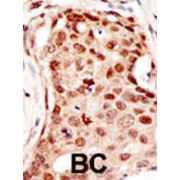
E3 Ubiquitin-Protein Ligase CBL-C (CBLC) Antibody
Cbl proteins are a family of ubiquitin protein ligases (E3s) that negatively regulate signaling by targeting activated t…
Ver producto