Mouse Apolipoprotein B (APOB) Protein

221€ (10 µg)
Por favor contáctenos para obtener información detallada sobre el precio y disponibilidad.
Name
Mouse Apolipoprotein B (APOB) Protein
Category
Proteins and Peptides
Provider
Abbexa
Reference
abx065413
Tested Applications
WB, SDS-PAGE
Description
Mouse Apolipoprotein B (APOB) is a recombinant Mouse protein expressed in E. coli.
Documentos del producto
Instrucciones
Data sheet
Especificaciones del producto
| Category | Proteins and Peptides |
| Immunogen Target | Apolipoprotein B (APOB) |
| Host | E. coli |
| Assay Type | Activity: Not tested Sequence Fragment: His3360-Arg3526 Tag: N-terminal His tag |
| Origin | Mouse |
| Conjugation | Unconjugated |
| Observed MW | Calculated MW: 21.4 kDa Observed MW (SDS-PAGE): 21 kDa |
| Expression | Recombinant |
| Purity | > 90% |
| Size 1 | 10 µg |
| Size 2 | 50 µg |
| Size 3 | 100 µg |
| Size 4 | 200 µg |
| Size 5 | 500 µg |
| Form | Lyophilized |
| Tested Applications | WB, SDS-PAGE |
| Buffer | Prior to lyophilization: PBS, pH 7.4, containing 0.01% Sarcosyl, 5% Trehalose. |
| Availability | Shipped within 5-7 working days. |
| Storage | Store lyophilized form at 2-8°C for up to 1 month. For longer periods, store lyophilized or liquid at -80°C. Avoid repeated freeze–thaw cycles. |
| Dry Ice | No |
| UniProt ID | E9Q414 |
| Alias | APOB, FLDB, LDLCQ4, apoB-100,apolipoprotein B, FCHL2 |
| Background | Protein APOB |
| Status | RUO |
| Note | THIS PRODUCT IS FOR RESEARCH USE ONLY. NOT FOR USE IN DIAGNOSTIC, THERAPEUTIC OR COSMETIC PROCEDURES. NOT FOR HUMAN OR ANIMAL CONSUMPTION. Reconstitute in ddH2O to a concentration between 0.1-1.0 mg/ml. Do not vortex. Concentration: Prior to lyophilization: 700 µg/ml |
Background
APOB is a major structural protein of low-density lipoproteins (LDL), very-low-density lipoproteins (VLDL), and chylomicrons, which are essential for lipid transport and metabolism in the body It exists in two primary isoforms: APOB-100, produced in the liver, and APOB-48, synthesized in the intestine APOB-100 is critical for the assembly and secretion of VLDL and LDL particles, facilitating the transport of cholesterol and triglycerides to peripheral tissues via binding to the LDL receptor (LDLR) Mutations or overexpression of APOB contribute to familial hypercholesterolemia and other dyslipidemias, leading to elevated LDL cholesterol levels and increased risk of atherosclerosis and cardiovascular diseases APOB-48, on the other hand, plays a key role in chylomicron formation and dietary fat absorption Genetic variations in the APOB gene have been linked to metabolic disorders, including obesity, diabetes, and fatty liver disease APOB levels serve as a marker of cardiovascular risk, with elevated concentrations indicating higher susceptibility to coronary artery disease Therapies targeting APOB, such as antisense oligonucleotides or LDL-lowering drugs like statins, have shown significant success in reducing cardiovascular events APOB remains a key focus in lipid biology due to its central role in lipid transport and cardiovascular health
Productos relacionados

Apolipoprotein B (APOB) Antibody
APOB Antibody is a Rabbit Polyclonal antibody against APOB. APOB, also named as Apo B-48 and Apo B-100, is a major prote…
Ver producto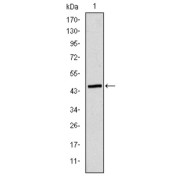
Apolipoprotein B (ApoB) Antibody
This gene product is the main apolipoprotein of chylomicrons and low density lipoproteins. It occurs in plasma as two ma…
Ver producto
Apolipoprotein B-100 (APOB-100) Antibody
APOB-100 Antibody is a Mouse monoclonal antibody for lipoproteins against APOB-100.…
Ver producto